Vivek Kishore Verma

Vivek Kishore Verma

CEO

28 articles on Adviora

CEO | Education & Tech Platforms | Institution Builder | AI for Learning & Governance | Driving Scalable Education Solutions

Contact and profiles

Blog articles

AI share of voice: define the denominator and calculate it consistently
AI Visibility· 8 min read

AI Share of Voice: Define the Denominator and Calculate It Consistently

AI share of voice is the percentage of brand mentions in AI answers that belong to you, measured against a fixed list of competitors and a fixed set of prompts. Work it out separately for each AI engine, run each prompt several times, and keep the prompts, competitors and number of runs the same from one report to the next.
How to Track AI Referral Traffic in GA4: ChatGPT, Perplexity & Claude
Technical SEO· 9 min read

How to Track AI Referral Traffic in GA4: ChatGPT, Perplexity & Claude

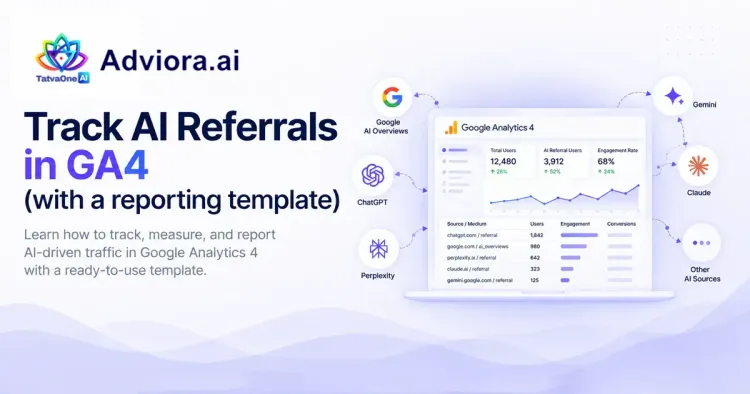
Someone discovers your business through ChatGPT, clicks a link, and lands on your website. You'd expect Google Analytics 4 (GA4) to show where that visitor came from. Sometimes it does. Sometimes that same visit appears under Direct, making it difficult to tell whether AI assistants are actually sending people to your site. The good news is that GA4 now has a built-in way to measure traffic from AI assistants. You can also create custom reporting rules for sources that aren't classified the way you expect. Here's how to track AI referral traffic in GA4, understand what the numbers mean, and measure whether those visits are turning into leads.

AI visibility audit
GEO & AEO (AI Visibility)· 8 min read

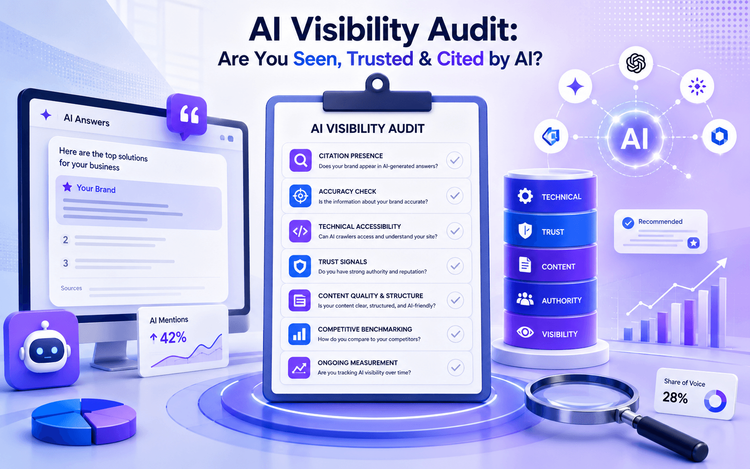
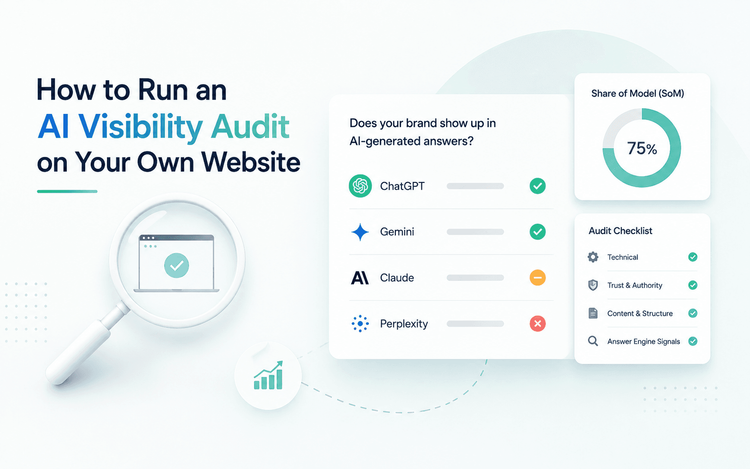
AI Visibility Audit: 5 Steps to a Ranked Fix List

Create an AI visibility audit that verifies if AI names your brand, links to your site and describes it faithfully, then tells you why it isn't. Do it in five clicks: Select a pack of buyer prompts, run them across the engines, note mentions and citations, verify crawl access and markup, and rank each result on a fix list. If you're told to "audit our AI visibility", the hard part isn't your run of a few prompts through ChatGPT. It's making a result you can replicate next month and a list your writers and developers can do something about. This article gives you the methodology, highlights the baseline Adviora set for our own website on 15 October 26 and concludes where the most checklists of checklists often end: what should be fixed first.

Technical SEO Checklist: Crawlability, Indexing & Core Web Vitals
AI Visibility· 14 min read

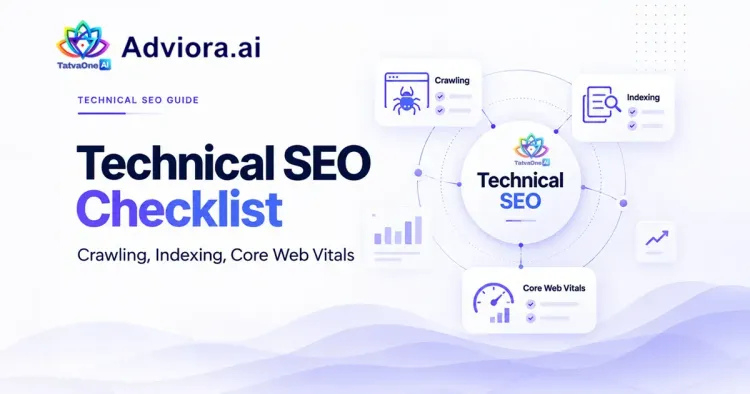
Technical SEO Checklist: Crawlability, Indexing & Core Web Vitals

A technical SEO checklist is used to fix issues that are blocking the search engines and AI search crawlers from crawling your pages. Focus on crawlability and indexation, and then work through the main issues including JavaScript rendering, Core Web Vitals, schema and internal linking. Fix any issues on high value pages and templates, then move on to lower value warnings.

Prompt for SEO, GEO, AI visibility
AI Visibility· 8 min read

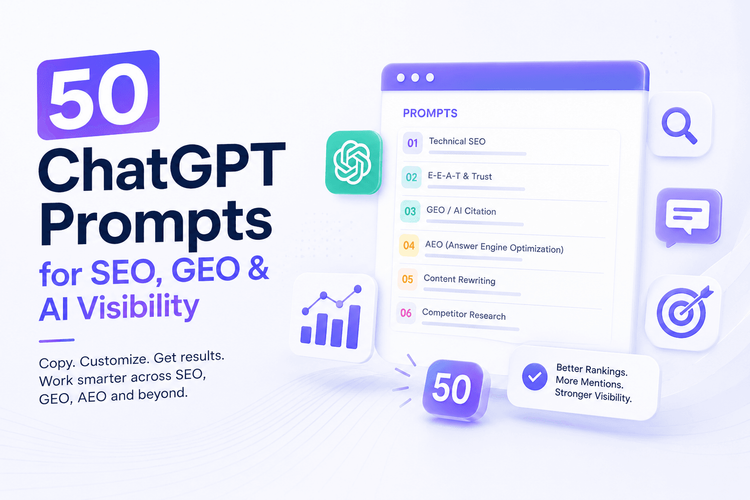
ChatGPT Prompts for SEO, GEO & AI Visibility (Free Prompt Library, 2026)

These aren't writing prompts: they are scaffolding, giving ChatGPT context, task, output format and guardrails to stop hallucinating. Here are 6 buckets worth of essential prompts: technical SEO, E-E-A-T/trust, GEO/AI citation, AEO, rewriting your content, and competitor research, set to copy and paste, edit, and a handy "formula" for rolling your own when not a one of these quite fits the bill.

AI vs Traditional
AI Visibility· 6 min read

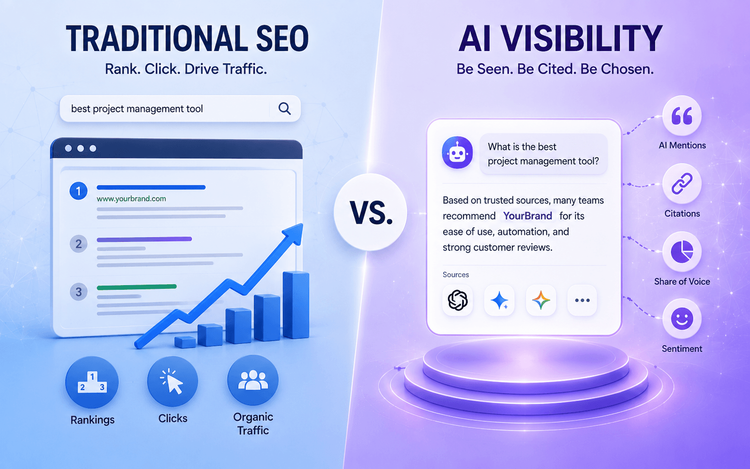
AI Visibility vs. Traditional SEO: What's the Real Difference? (2026)

Traditional SEO improves a website's visibility in search engine results rankings, clicks, organic traffic. AI Visibility (also called AI SEO, GEO, or AEO largely interchangeable industry terms for the same discipline) improves the odds your content gets pulled into an AI-generated answer from ChatGPT, Gemini, or Google AI Overviews. The metrics differ accordingly: SEO is measured in rankings and traffic; AI Visibility is measured in AI mentions, citations, share of voice, and sentiment.

What is Growth Operating System
AI Visibility· 8 min read

What Is a Growth Operating System (and How Is It Different from an SEO Tool)?

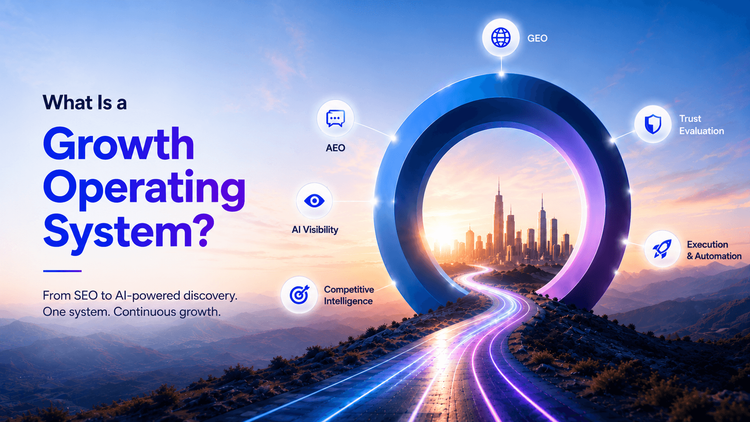
A Growth Operating System is an integrated marketing intelligence platform that combines SEO, Generative Engine Optimization (GEO), Answer Engine Optimization (AEO), AI Visibility analysis, competitive intelligence, trust evaluation, and execution workflows into one continuous optimization cycle. Unlike a traditional SEO tool, which mainly identifies issues, a Growth Operating System prioritizes what matters, generates deployable fixes, and measures whether those fixes actually worked.

Generative Engine Optimization
GEO & AEO (AI Visibility)· 6 min read

Generative Engine Optimization (GEO): What It Is and Why It Matters (2026)

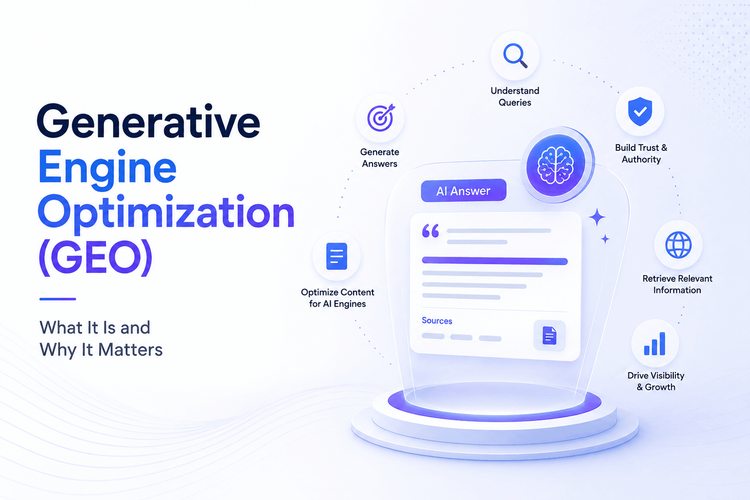
Generative Engine Optimization (GEO) is the practice of designing and optimizing content so that a new class of generative AI engines - ChatGPT, Google Gemini, Claude, Perplexity, Google AI Overviews - will use those contents to cite, quote or recommend a brand in their AI generated answers. Unlike traditional search engine optimization that is graded on rank position and traffic, GEO is graded on citation frequency, Share of Model (how often a brand is cited in a representative sample of AI responses for the brand category), and citations quality - accuracy, prominence, and sentiment.

Case studies

Content Marketing & Strategy

Marketing Intelligence Platform Case Study: From Insight to Execution

A B2B SaaS company had access to extensive SEO, content, competitor, website, analytics, and AI-search data — but its marketing teams struggled to turn those insights into clear, prioritized actions. By connecting measurement, diagnosis, competitive intelligence, AI-search visibility, recommendations, execution, and measurement into one workflow, the company moved from fragmented reporting to a continuous measure → understand → evaluate → recommend → execute → measure process. The result was a shorter path between identifying a marketing opportunity and deciding what to do next.

Knowledge hub

AI Visibility· 11 min read

FAQ schema and AI search: what still works

FAQ schema will no longer get a rich result from Google. In August 2023 Google limited who could get rich results from FAQ schema to well known government and health pages. Then on 7th May 2026 Google stopped giving FAQ rich results to any site. Google also state that AI Overviews and AI Mode do not require any additional markup. The only real reason to pay for structured data is to tell people who you are, what you are selling and who wrote the page using matching markup. If you’ve been asked to “add FAQ schema for AI” this guide will show you how Google and AI assistants actually use this, how to audit your existing FAQ markup and what to put in place instead.

Content Marketing & Strategy· 7 min read

Content gap analysis: find the topics competitors are cited for

A content gap analysis finds the topics your buyers search for and ask about where a competitor shows up, and you don’t. For AI search, run it on Google and on AI answers together. Look for the questions where engines cite a competitor or a third-party site instead of you. Then create a page, improve one, merge two, or earn a mention on the site being cited. Most content gap tools compare your keywords with a competitor’s. You still need that check, but it only covers Google rankings. In an AI answer, a competitor can be named even when you outrank them, and a third-party review can be cited ahead of you both. This guide shows how to find gaps in both places and turn them into a short list of pages to write, fix or merge. The worked example uses a Adviora audit of an Indian online skincare and makeup store.

GEO & AEO (AI Visibility)· 9 min read

How SEO, GEO and AEO Actually Differ

SEO, AEO and GEO optimise for three different units of success. SEO earns a ranked link that a user clicks. AEO earns an extracted answer a featured snippet, a People Also Ask entry or a voice response that resolves the query in place. GEO earns a cited passage inside an AI-generated answer from engines such as ChatGPT, Gemini, Perplexity or Google's AI Overviews. LLMO is the underlying discipline of making your entities and facts unambiguous enough for a language model to retrieve and attribute correctly.

Backlink and Digital PR· 7 min read

Broken Backlink Recovery: The Fastest Authority Win

A broken backlink is an external link pointing at a URL on your site that no longer resolves it returns 404, 410, a soft 404, or redirects into a dead end. Recovery is fast because you control the destination and need no outreach: restore the page if the content still has a job, 301 to the closest genuine equivalent if it does not, and leave it 410 when no equivalent exists.

GEO & AEO (AI Visibility)· 13 min read

How to improve AI search visibility: what to fix first

Here's the order to fix this for better AI search: Crawl access: ensure search crawlers and AI fetchers can access your pages. Entity & trust: one company name, one description, and real author and company pages. Answer first pages with the matching markup. Get named on third-party pages that the AI engines are already citing. Revisit the same prompts again about 30 days later. Most AI visibility reports will show you what you're lacking. Few will suggest what to focus on first. Here Adviora tell you what we recommend doing first, in the order we recommend during client audits, how to do it, its cost (if you want us to do it for you), and how ChatGPT, Perplexity, Claude and Google's AI capabilities compare. Each step links to the relevant tutorial.

Technical SEO· 6 min read

Zero-click searches and query fan-out: what changes for your pages

Zero click searches are searches where the user receives the information they need on the search results page (or within the AI answer). Query expansion is when an AI takes the initial search query and expands it into multiple related searches. It then uses the pages to create its answer. Both reward pages that clearly answer the query and fully cover that topic. They won’t reward pages that have a unique page for each variation of the search. This page will help you explain to leadership next week why you’re seeing more impressions but no increase in clicks. We’ll cover the two mechanisms in play, what you should improve on your pages and how to interpret Search Console.

Content Marketing & Strategy· 8 min read

Unified Social Media Analytics: GA4, Meta, LinkedIn & More

Unified social media analytics means consolidating GA4, Meta, LinkedIn, YouTube, Reddit and TikTok data into one comparable view. The numbers never reconcile exactly because each platform uses its own session, view and impression definitions, its own attribution windows, and its own self-reported data. The workable approach is a three-layer model: keep platform-native metrics for within-platform trends, normalise only metrics with a shared definition, and settle all outcome reporting on one site-side source such as GA4.

E-E-A-T & Trust· 9 min read

The 7 Trust Pages Every Website Must Have

Seven page types establish that a website is accountable: an About page naming the legal entity and the people behind it; a Contact page with verifiable details, not just a form; an editorial or content policy explaining how content is produced and corrected; a privacy policy; terms of service; author or team profiles with real credentials; and a trust page covering accreditations, security or compliance. Together they answer Google's "Who created this content?" test.

9 min read

Technical SEO Audit: Crawl, Index, Mobile, Performance

A technical SEO audit covers six categories: security (HTTPS and certificates), crawl (can bots reach your pages and resources), mobile (does the page render on a phone), technical markup (canonicals, headings, structured data), indexation (does the page qualify to be indexed) and performance (Core Web Vitals). Triage every finding with one question: does it block crawling, block indexing, degrade experience, or merely deviate from best practice? Fix in that order, because a crawl block hides the effect of every other fix.

GEO & AEO (AI Visibility)· 11 min read

robots.txt for AI Crawlers: GPTBot, ClaudeBot & More

Claude Bot, GPTBot and OAI-Search Bot are three different crawlers, three different jobs. Content collection for AI model training, as a business decision, allows: Claude Bot (Anthropic), GPTBot (OpenAI) Content feeding of AI search answers: OAI-Search Bot (OpenAI), Claude-Search Bot (Anthropic) If you want to be thanked, allow. But then do four things in turn: look at your robots.txt groups, your server's behavior on each crawler, your logs and CDN rules, and if your content is present in the raw HTML. If you saw "Claude Bot" in your server logs and are facing the decision today whether to let it in, here's the crawler table, the decision rule, and four checks you can do on your own site.

Backlink and Digital PR· 9 min read

Orphan Pages: Find, Fix and Reclaim Lost Link Equity

An orphan page is a URL with no internal inbound links anywhere on the site, as discovered by a crawl that starts from your homepage rather than from your sitemap. It can still sit in the XML sitemap, still be indexed, and still receive external links and direct traffic. Orphaning is a discovery and importance problem rather than an indexing status: the page exists, but nothing on your own site vouches for it.

Technical SEO· 13 min read

Modern Search Metrics Glossary: AEO, GEO and AI Scores

Modern search metrics fall into four classes. Standards are published and comparable everywhere: Core Web Vitals thresholds of LCP at or under 2.5 seconds, INP at or under 200 milliseconds and CLS at or under 0.1, measured at the 75th percentile. First-party metrics are reported directly by Google Search Console: clicks, impressions, click-through rate and average position. Observed or sampled metrics, such as citation coverage and share of model, depend entirely on your sampling method. Vendor composites, AEO Score, GEO Score, AI Visibility Index, Domain Rank, spam score, Trust Deficit Score, are proprietary and only meaningful as a trend within one tool. Never benchmark a vendor composite against another vendor's number.

Execution & Recommendation Engine· 10 min read

Mobile Render Failures: How to Diagnose and Fix Them

A mobile render failure is a page that responds successfully but produces no usable content in a mobile rendering engine. The HTML arrives; then the JavaScript fails, a required resource is blocked, the viewport is misconfigured, lazy-loaded content never triggers, hydration throws an error, or the renderer times out. Because the status code is 200 and the desktop view looks fine, the failure is invisible to every standard report. Under mobile-first indexing, what fails to render is what fails to rank.

Technical SEO· 7 min read

Marketing Intelligence Loop: Data to Diagnosis to Execution

A marketing intelligence loop is a repeatable cycle with five stages: collect data from verified connectors, build a structured knowledge base of the business and its audience, identify gaps by scoring that knowledge against an explicit benchmark, convert the gaps into a prioritised strategy, then recalibrate using the measured delta after changes ship. Most marketing stacks stop at stage one, because a dashboard reports state but never closes the loop from diagnosis to action to verified impact.

AI Visibility· 8 min read

E-E-A-T Explained: Google's 4 Quality Signals Decoded

E-E-A-T stands for Experience, Expertise, Authoritativeness and Trustworthiness, the framework Google's search quality rater guidelines use to judge content quality. Google's own framing is that "trust is most important. The others contribute to trust, but content doesn't necessarily have to demonstrate all of them." E-E-A-T is not a score Google computes or publishes. Any numeric E-E-A-T score is a vendor proxy built from observable signals: authorship, citations, contact detail and policy pages.

Customer & Persona Intelligence· 8 min read

Client Knowledge Base: Why AI Marketing Fails Without One

A client knowledge base (CKB) is a single, verified store of everything an AI system needs to reason about a specific business: legal and business facts, products, locations, connected analytics data from GA4 and Search Console, the competitor set, evidence-based personas, brand guidelines and compliance constraints. Without it, a language model produces confident, generic, unverifiable marketing advice. With it, every recommendation is grounded in that company's own data and can be traced back to a source.

Customer & Persona Intelligence· 8 min read

Data-Derived Personas vs Invented Personas: Building from GA4 and Search Console

A data-derived buyer persona is built from observed behaviour rather than workshop assumptions. Google Search Console supplies the demand side, queries, pages, countries and devices, with the query dimension revealing actual intent. GA4 supplies the behaviour side: source, medium and campaign, landing page, page title and event parameters. Demographics such as age and gender only appear in GA4 when Google Signals is enabled, so behavioural segmentation is the more reliable foundation. Motivation and friction are then inferred from those patterns, and labelled as inference.

Backlink and Digital PR· 7 min read

Backlink Health 101: DoFollow Ratio & Referring IPs

The quality of your backlinks are more important than the quantity. You want to ensure that your referring domains are high quality, they have been given editorially (not paid) and the referring IPs/subnets are diverse. You also want to make sure the anchor text looks natural. The DoFollow ratio and Domain Rank are both descriptive metrics provided by vendors so should be used for comparison purposes only.

Read how Adviora works on the about page and how every score is calculated on themethodology page.

Get your free fix list